
A drain can look perfectly normal from the garden while something very different is happening several feet below it.
Water may begin draining more slowly. The toilet might gurgle. An outside drain blocks, gets cleared, then blocks again a few weeks later.
Eventually, conventional drain unblocking stops solving the problem.
Why?
Because sometimes there isn’t simply something stuck inside the pipe. The drain pipe itself has failed.
A collapsed underground drain can restrict wastewater flow, allow surrounding soil into the pipe, and potentially cause problems at ground level. Understanding the early warning signs can help Chester homeowners investigate the problem before it develops further.
🔎 What Does a Collapsed Drain Actually Look Like?
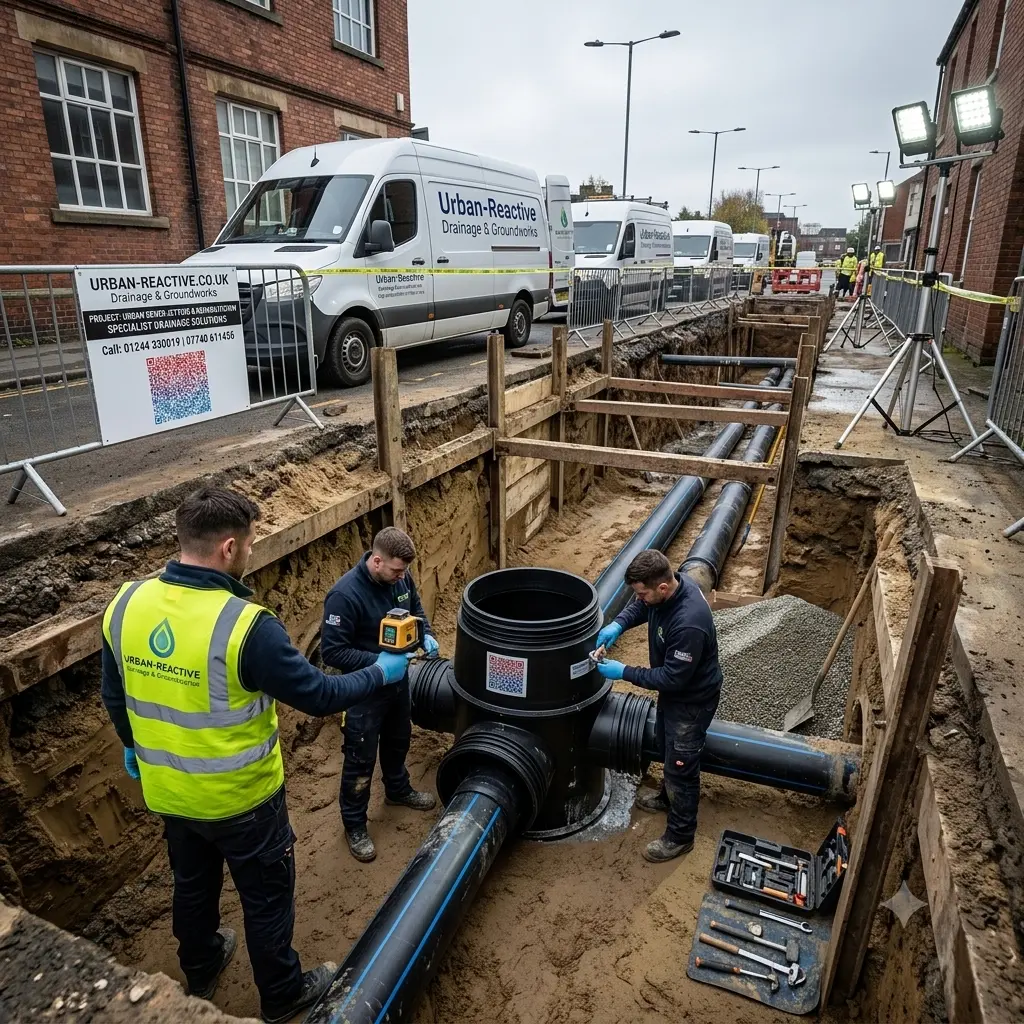
“Collapsed drain” can describe several levels of structural failure.
The pipe doesn’t necessarily disappear completely.
Damage may begin with:
• A significant crack
• A displaced joint
• Part of the pipe wall breaking away
• Severe deformation
• Sections becoming misaligned
• Complete structural collapse
Older clay drainage is particularly worth investigating when recurring problems develop, although newer drainage can also be damaged by ground movement, poor installation or external loading.
The important distinction is between a blocked pipe and a structurally damaged pipe.
🚽 Stage One: The Drain Starts Behaving Differently
A structural problem can initially look surprisingly ordinary.
You might notice:
□ Water taking longer to drain
□ Toilets becoming slow to clear
□ Gurgling after flushing
□ Outside gullies backing up
□ Unpleasant drain smells
□ The same blockage repeatedly returning
One isolated blockage doesn’t mean your drain has collapsed.
But repeated problems in exactly the same section deserve further investigation.
⚠️ Stage Two: The Opening Begins Catching Waste
Imagine a damaged section of pipe underground:
NORMAL PIPE

Wastewater
    ↓
───────────────→
Clear flow


DAMAGED PIPE

Wastewater
    ↓
───────╲
        ╲ Broken section
         █
───────╱
       ↓
Waste begins collecting
Toilet paper, fats, wipes and other debris can catch around the damaged section.
This creates a secondary blockage.
Clearing that blockage may restore flow temporarily, but it doesn’t repair the pipe.
That’s why some homeowners find themselves paying to unblock the same drain repeatedly.
🌧️ Stage Three: Water Can Escape Into the Surrounding Ground
A structurally failed drain may no longer contain wastewater as intended.
Depending on the location and nature of the damage, leakage can affect the surrounding ground.
Equally, groundwater, soil or fine material may find its way into damaged drainage.
Over time, this can potentially contribute to:
• Localised ground instability
• Voids around the pipe
• Sinking surfaces
• Problems around paving
• Further movement of already damaged pipework
Not every collapsed drain produces these symptoms, but unexplained surface movement combined with recurring drainage problems is worth investigating.
🕳️ Could a Collapsed Drain Cause the Ground to Sink?
It can be one possible cause, but you shouldn’t assume every sunken driveway or patio has a broken drain underneath it.
Poorly compacted ground, inadequate sub-bases, leaking water pipes and natural ground movement can produce similar symptoms.
This is where diagnosis becomes important.
If paving starts sinking directly above a drainage route and you’re also experiencing repeated blockages, those two symptoms together provide a stronger reason to investigate underground.
📹 The Camera Test: Finding Out What’s Actually Happened
This is where CCTV drain surveying becomes particularly useful.
A specialist drainage camera can travel through accessible sections of the system and help identify defects such as:
• Cracks
• Displaced joints
• Root intrusion
• Deformation
• Obstructions
• Structural failure
• Sections that can no longer be surveyed because of severe restriction or collapse
The aim isn’t simply to confirm that “something is wrong”.
It’s to establish where it is and how serious it is.
🛠️ Does a Collapsed Drain Always Have to Be Dug Up?
No, but this depends entirely on the condition of the pipe.
Some localised structural defects may be suitable for trenchless repair techniques such as patch lining.
Urban Reactive has a published guide explaining how localised patch repairs can sometimes repair damaged drainage without conventional excavation:
Patch Liner Drain Repair Chester
https://urban-reactive.co.uk/patch-liner-drain-repair-chester/
However, a severely deformed or completely collapsed pipe may not provide enough structural integrity for lining.
In that situation, excavation and replacement of the failed section may be necessary.
⚖️ Blockage, Damage or Collapse?
Here’s a useful way of looking at it:
| Problem | Typical Approach |
|---|---|
| Ordinary obstruction | Clear the blockage |
| Root intrusion | Remove roots and inspect |
| Localised crack | Assess for repair/lining |
| Displaced joint | Assess severity and repair |
| Major deformation | Structural repair may be needed |
| Complete collapse | Excavation may be necessary |
The repair should follow the diagnosis, not the other way around.
🌳 Why Do Underground Drains Collapse?
There isn’t one single cause.
Ground Movement
Wet and dry conditions can cause surrounding soils to move, particularly where ground conditions are susceptible to seasonal change.
Tree Roots
Roots usually exploit existing defects rather than simply smashing through sound drainage. Once inside, however, continued growth can worsen an existing weakness.
Ageing Pipework
Older drainage materials and joints can deteriorate or move over decades.
Poor Installation
Inadequate bedding or poor installation can leave sections of pipe insufficiently supported.
Heavy Loads
Traffic or construction loads can contribute to damage where drainage isn’t sufficiently protected.
Previous Building Work
Extensions, driveways and landscaping can alter loads, levels and drainage routes around a property.
Often there isn’t one dramatic event. The pipe deteriorates gradually until symptoms finally become noticeable.
🚨 The Recurring Blockage Rule
Here’s a useful rule for homeowners:
One blockage = clear it and monitor.
The same blockage repeatedly = investigate why.
Repeatedly jetting or rodding a structurally damaged drain may restore flow, but it cannot rebuild the pipe.
Finding the underlying cause can prevent years of repeated call-outs.
✍️ Luke’s Advice
Don’t panic because you’ve had a blocked drain. Most blockages aren’t collapsed pipes.
What I’d pay attention to is a pattern.
If exactly the same drain keeps blocking, particularly when it’s accompanied by smells, slow drainage or movement in the ground above, it’s worth looking inside rather than guessing.
A CCTV inspection can often tell us whether we’re dealing with an ordinary obstruction, root damage, a displaced joint or something more serious.
Once we know that, we can choose the least disruptive repair that’s genuinely suitable.
Give me a call for free advice
🔗 Related Guides Worth Reading
Why Drain Maintenance Prevents Expensive Repairs
https://urban-reactive.co.uk/drain-maintenance-prevents-repairs-chester/
How CCTV Surveys Find Root Intrusion Quickly
https://urban-reactive.co.uk/cctv-survey-root-intrusion-chester/
Patch Liner Drain Repair Chester
https://urban-reactive.co.uk/patch-liner-drain-repair-chester/
Why Is My Drain Slow in Chester? Common Causes
https://urban-reactive.co.uk/why-is-my-drain-slow-in-chester-common-causes/
Why Rats Get Into Older Clay Drain Pipes in Chester
https://urban-reactive.co.uk/rats-clay-drain-pipes-chester/
