
Winter rain can make drainage problems easier to spot. A patch of ground that stays wet, a slow outside gully or paving that begins to sink may point to a hidden drain defect. But blocked gullies, surface runoff and poorly draining ground can cause similar signs.
If the same spot keeps causing concern, note what happens after rainfall and get the cause checked before deciding what repair is needed.
Why winter can reveal a problem
A drain may cope in dry weather but struggle when more water flows through it. A crack, displaced joint or partial blockage can slow the flow or allow water to escape.
Over time, escaping water may soften or wash away soil around a pipe. This can contribute to a dip or settlement above it. A sunken patch alone does not prove the drain is damaged. Ground movement, the condition of the driveway base and surface water can also play a part.
Heavy rain can also reveal surface drainage issues. Water may collect where a gully is obstructed, where paving directs runoff to a low point, or where the garden does not drain freely.
Signs to watch for around your property
After rainfall, look for a pattern rather than relying on one wet patch. Useful clues include:
- The same area remains wet after nearby ground starts drying.
- An outside gully drains slowly, or water rises around it.
- Paving has become uneven or started to sink.
- Soil above a drain route looks unusually soft or disturbed.
- A smell persists near an outside drain.
These clues can help a drainage specialist investigate, but they do not confirm the cause. Even a recurring puddle may be surface water rather than a leaking pipe.
Take a photo from the same position after rain and note how long the water takes to clear. Also note whether you have seen the problem once or repeatedly. This simple record can help show whether it is getting worse.
Hoole drainage experience
Urban Reactive has been in business for 26 years and has carried out hundreds of jobs in Hoole, including emergency drainage callouts and groundwork. Client details remain private.
One lesson from drainage work is that similar symptoms can have different causes. Wet ground, slow drainage and sinking paving need checking before anyone can say whether a pipe is damaged, blocked or unrelated to the problem.
What can you check safely?
From ground level, check for leaves or debris covering a gully, visible damage around a drain cover, or water flowing towards the house. Keep people away from any area that appears unstable or is sinking.
Do not lift heavy covers, enter a drain or dig to expose a pipe. Drain covers can be heavy, and unsupported ground can collapse. If water is entering the property, the ground is subsiding, or the symptoms are worsening, arrange a professional inspection promptly.
How an inspection can identify the cause
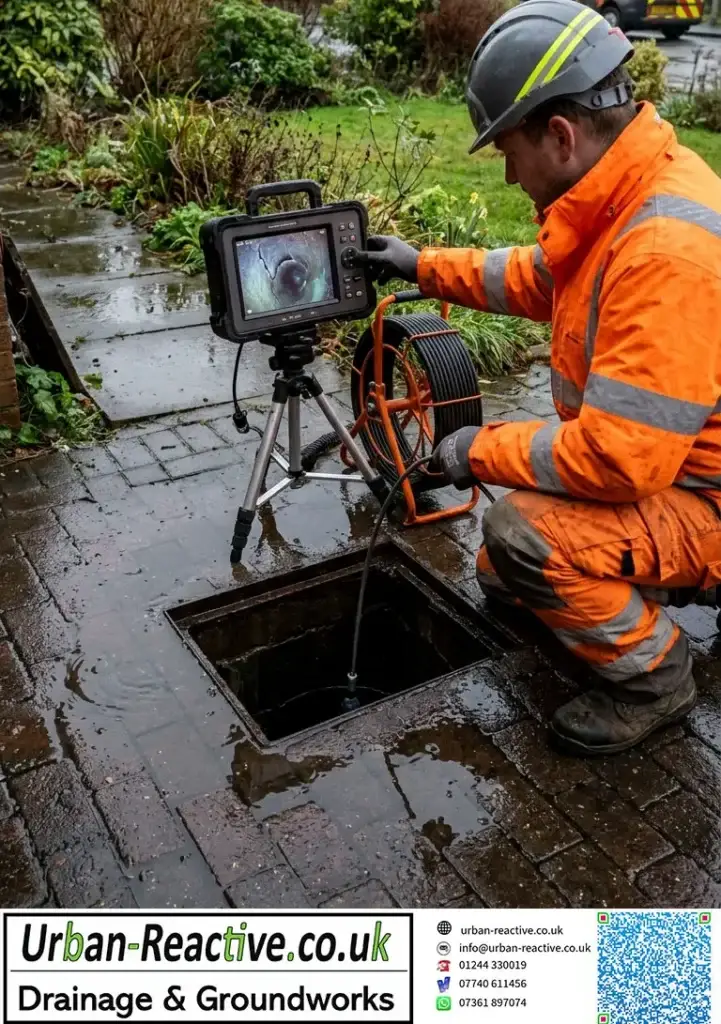
A drainage specialist will consider the visible signs and ask when they occur. Where suitable, a CCTV survey can inspect the inside of the pipe for cracks, displaced joints, root ingress, or a blockage.
The findings help guide the next step. A blockage may need clearing. A damaged section may suit a local repair or patch liner, depending on its position and condition. If the pipe is sound, the issue may involve surface-water drainage instead.
A CCTV survey has limits. It shows the condition of the pipe the camera can access, but it doesn’t automatically explain every wet patch or prove the surrounding ground has a drainage defect. Consider the results alongside the visible site conditions.
Why it helps to find the cause
A recurring puddle or small dip may seem minor, but finding the cause can help avoid guesswork. If a defect lets water escape, an inspection can help identify a suitable repair. If the pipe is sound, you can focus on the surface-water problem.

In winter, watch for recurring wet patches and changes in your driveway or garden level. Take a photo of what you see, stay clear of unstable ground, and arrange an inspection if the signs persist.
If you are concerned about a drain issue in Hoole or elsewhere around Chester, call Luke on 01244 330019.
