
Coming home from work to find a blocked toilet is never welcome. If you find a blocked toilet in Chester, don’t panic or keep flushing. A toilet that drains slowly may have a small local blockage, but rising water, sewage smells, or problems elsewhere in the house can point to a wider drainage issue.
This guide explains how to unblock a toilet safely, what to avoid and when an emergency blocked toilet in Chester needs professional attention.
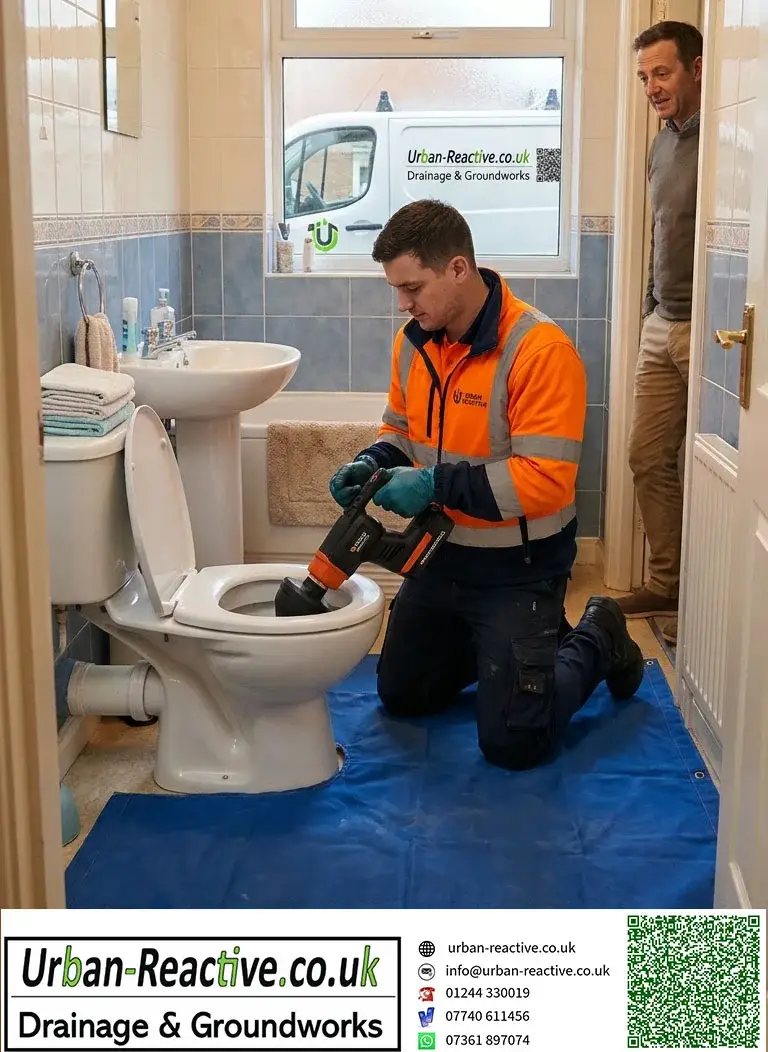
First, stop the toilet from overflowing
Do not press the flush again, even if the bowl appears to have drained slightly. Another flush could send more water into the pan and over the floor. If the toilet will not flush, leave it alone while you assess the situation.
If the water level is still rising, turn off the isolation valve. This is usually a small tap or valve on the pipe leading into the toilet cistern. Turn it clockwise until it stops. If you cannot find it, remove the cistern lid and lift the float carefully, or ask everyone in the property not to use that toilet until the problem is fixed.
Keep children and pets away from the area. If contaminated water has already escaped, wear waterproof gloves, keep the room ventilated and avoid spreading the water to other parts of the house.
Check what kind of blockage you have
A toilet can block for several reasons, including too much toilet paper, flushing unsuitable items, a build-up in the trap, or a restriction in the connected drain. These signs can help you gauge how serious the problem may be.
- Water rises but eventually goes down: the blockage may be close to the toilet.
- The toilet drains slowly and makes a bubbling sound: the pipework may be partially restricted.
- Several fixtures drain slowly, including the toilet, bath, shower, or basin: the problem may be further along the property drainage system.
- Wastewater comes back up through a low drain or toilet: stop using water throughout the property and seek help promptly.
Gurgling is particularly worth noting. Our guide, What Causes Gurgling Noises in Drain Pipes?, explains why bubbling or air sounds can sometimes indicate that wastewater is struggling to pass through the system.
Try a plunger carefully
If the bowl isn’t full to the rim and there is no sign of sewage backing up from other drains, a proper toilet plunger may be worth trying. A toilet plunger has a shaped flange designed to create a seal over the outlet.
- Put on rubber gloves and protect the floor with old towels.
- Make sure there is enough water in the bowl to cover the plunger head, but remove some if the level is too high.
- Place the plunger over the outlet and press down gently at first to form a seal.
- Use controlled pushes and pulls rather than violent force.
- After several attempts, remove the plunger slowly and see whether the water drains.
If the level rises, stop immediately. Do not keep plunging a toilet that is close to overflowing, as this can push dirty water over the edge or force a blockage further into the pipe.
What not to put down a blocked toilet
Avoid pouring boiling water, bleach or strong drain chemicals into the pan. Boiling water can damage some toilet components, while chemical products may splash back and create a hazard if the toilet later needs to be dismantled or rodded. Mixing cleaning products can also produce dangerous fumes.
Do not use a coat hanger, stick or other improvised tool. These can scratch the ceramic, damage the trap or push the obstruction deeper. If you know that a solid object, nappy, wipe or sanitary product has been flushed, professional removal is usually safer than repeatedly trying to force it through.
Could the toilet blockage actually be a blocked drain?
Sometimes the toilet is only the first visible sign of a problem outside the house. Check other fixtures without using large amounts of water. Is the kitchen sink draining normally? Is the bath emptying? Do you notice unpleasant smells near an outside inspection chamber or gully?
If several fixtures are affected, the restriction may be in a shared or underground drain rather than in the toilet itself. This is a common concern when investigating blocked drains in Chester. You can read more about the options in Who should I call for a blocked drain in Chester?
Do not lift an inspection chamber cover if sewage is visibly backing up or you are not confident doing so. Covers can be heavy, and contaminated water may be present. A drainage professional can investigate the blockage route and determine whether cleaning, high-pressure water jetting, a camera inspection, or a repair is appropriate.
When should I call a professional?
Arrange professional help if the toilet remains blocked after a careful attempt with a suitable plunger, if water is overflowing, or if more than one drain is affected. You should also seek help if the blockage keeps returning, as a temporary opening may not resolve a damaged, displaced or root-affected pipe.
If you need drain unblocking services in Chester, choose professional help if the blockage persists, wastewater keeps returning, or several fixtures are affected. Repeated blockages, bad smells, damp patches or noisy drains should not simply be treated as isolated toilet problems.
Our guide to What usually causes recurring blocked drains in Blacon? covers several underlying causes that can also affect properties elsewhere in and around Chester.
If wastewater has entered the home, keep people away from the affected area, avoid contact with your eyes or mouth and do not mix cleaning chemicals. Take photographs if appropriate, particularly if you rent the property, and notify your landlord or managing agent as soon as possible.

“The quickest way to make a toilet blockage worse is to keep flushing and hope it clears itself. Stop the water first, give yourself room to work, and check what the rest of the drainage system is doing. If the toilet is the only affected fixture, a proper plunger may solve a simple local blockage. If sinks and baths are also slow, or the water is coming back up, I would treat it as a drainage problem rather than keep experimenting with the toilet.”
“I would also avoid chemical unblockers. They rarely solve a solid obstruction in a toilet and can make the job more dangerous for anyone who has to work on the pipe afterwards.”
How to reduce the chance of another blockage
- Flush only toilet paper and human waste.
- Put wipes, cotton buds, nappies, sanitary products and paper towels in a bin, even when packaging says they are flushable.
- Do not flush large amounts of paper at once.
- Deal with slow draining or gurgling promptly rather than waiting for a complete blockage.
- Arrange an inspection if blockages recur or several fixtures are affected.
For more information about outdoor restrictions and why small symptoms can become bigger, more expensive problems, see Why Small Outdoor Drain Problems Become Big Expensive Repairs.
Related Urban Reactive Guides
- Who should I call for a blocked drain in Chester?
- What Causes Gurgling Noises in Drain Pipes?
- What usually causes recurring blocked drains in Blacon?
- Why Small Outdoor Drain Problems Become Big Expensive Repairs
Final thoughts
When you get home to a blocked toilet, stop flushing, isolate the water supply and establish whether the problem is limited to the toilet. A careful plunger attempt may clear a straightforward blockage, but an overflowing toilet, sewage, multiple slow drains, or recurring problems warrant a more thorough investigation.
Urban Reactive provides drainage and groundworks services in Chester and the surrounding area. Visit Urban Reactive to learn more about the drainage support available for your property.
If you need any further free advice, or if we can assist with your issues, please call me, Luke, on 01244 330019.