
A new patio can completely transform an outdoor space. But the part most people never see is the part that really matters. The base beneath the paving determines whether a patio lasts for years or starts shifting within a couple of winters.
Around Chester, particularly in areas like Hoole, Upton, Blacon, Vicars Cross and Christleton, we are often called out to patios that have started to dip, rock or hold puddles. In most cases, the slabs themselves are fine. The real problem is that the base wasn’t properly prepared when the patio was first installed.
I remember one job in Waverton where a homeowner had only installed their patio three years earlier. After a wet winter, several slabs near the house had dropped. When we lifted them, the base underneath was mostly sand with very little sub-base. Over time, rainwater had washed it away, leaving the slabs unsupported.
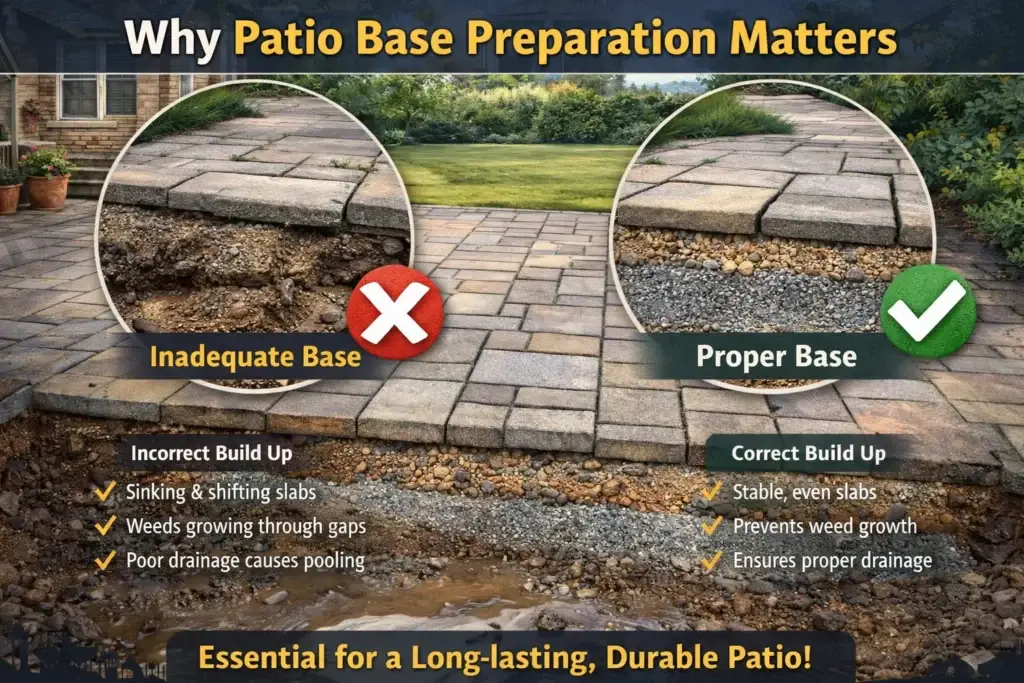
💧 What Happens When the Base Isn’t Built Properly
If the foundation beneath a patio isn’t prepared correctly, a few common issues start to appear:
- Slabs begin to move or rock when walked on
- Puddles form after rain because the levels have shifted
- Edges start sinking near garden walls or lawns
- The patio slowly becomes uneven or cracked
Water is usually the biggest factor. Without proper drainage and compaction, rain gradually softens the ground beneath the paving.
In some cases, nearby drainage issues, such as blocked drains in Chester or poor surface water control, can also contribute to the weakening of the ground beneath patios.
🔎 Signs Your Patio Base May Be Failing
If you notice any of the following, the base layer may be starting to fail:
• Slabs rocking slightly when stepped on
• Small dips appearing between paving joints
• Water sitting on the surface after rain
• Sand washing out from the joints
These are usually early signs that the structure underneath is shifting.
🛠️ How a Proper Patio Base Is Built
A well-installed patio should always include:
- Excavation to the correct depth
- A compacted sub-base layer for strength
- Proper drainage to move water away
- A stable bedding layer before laying slabs
Good groundwork ensures the patio remains level and stable for years.
Where water movement is affecting the ground, improvements to Drainage in Chester systems may also help prevent future movement. In some cases, we also inspect nearby pipework with a CCTV Drain Survey in Chester to rule out hidden issues.

If a patio starts sinking, don’t just keep laying the slabs on more sand. The real issue is usually underneath. Fixing the base properly prevents the same problem from coming back.
I’m Luke from Urban-Reactive.co.uk. If you’re unsure what you’re looking at or just want a bit of free, honest advice before calling anyone out, give me a shout — I’m always happy to point you in the right direction.


Have you seen https://urban-reactive.co.uk/lamb-fat-blocking-drains-chester-easter/ or https://urban-reactive.co.uk/%f0%9f%90%80-rats-attracted-fat-drains-chester/