
Most people think that if they see a rat in the garden, that’s where the problem stays. In reality, once rats find a way into your drainage system, they can use your property’s cavity walls and hidden voids to move around without ever being seen.
Across Chester, Hoole, Upton, Blacon and Saltney, this is something we come across more often than people expect — especially in homes with older drainage systems.
I was recently at a property in Vicars Cross where the homeowner kept hearing scratching noises in different parts of the house. One night it was the kitchen wall, the next it was upstairs. It felt like the problem was moving.
It was.
After carrying out a CCTV Drain Survey in Chester, we found rats entering through a damaged section of the drain pipe. From there, they accessed the cavity wall and travelled freely through the property.
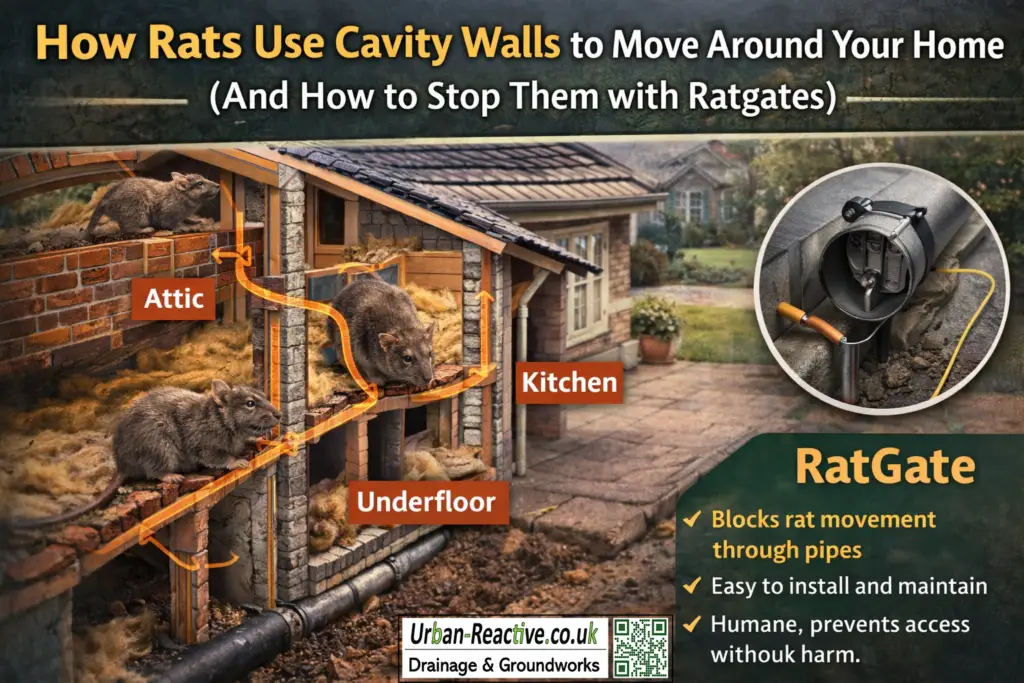
🧱 How Rats Move Through Cavity Walls
Modern homes are built with cavity walls — a gap between the inner and outer brickwork. It’s great for insulation, but it also creates a hidden route that rats can use once they get inside.
Rats typically enter the system through:
- Cracked or displaced drain pipes
- Older clay pipe joints
- Open or damaged inspection chambers
- Unprotected sewer connections
Once inside, they can:
- Travel vertically between floors
- Move across the entire property unseen
- Nest in lofts, under floors, or behind walls
- Access kitchens and bathrooms through pipe entry points
That’s why you might hear them in different places at different times.
🔎 Signs Rats Are Using Your Property Structure
If rats are moving through cavities, you might notice:
- Scratching or movement in walls or ceilings
- Noises that seem to “move” around the house
- Droppings near pipe entry points or cupboards
- Smells are coming from hidden areas
- Repeated Blocked Drains Chester
Often, the real issue starts underground in the drainage system.
🛠️ How Ratgates Stop the Problem at Source
The most effective way to prevent rats from entering your home through drains is to block them before they reach your property.
That’s where Ratnogo ratgates come in.
A ratgate (non-return valve) is installed inside your drain pipe. It allows wastewater and solids to flow out normally, but physically stops rats from travelling back up the pipe.
At Ratnogo, installations are always carried out after a proper inspection to ensure:
- The valve is placed in the correct location
- It won’t restrict normal drainage flow
- It targets the exact entry route
In many cases, once a ratgate is installed and the pipe is secured with Drain Repairs Chester, the problem is completely resolved.
You can also learn more about how drainage systems affect properties by visiting Drainage in Chester.

If you’re hearing rats moving through different parts of the house, don’t assume it’s multiple entry points. It’s usually one access point into the drains, and from there, they’re using the structure of the property to move around.
Stopping them at the drain level is always the most effective long-term fix.
I’m Luke from Urban-Reactive.co.uk. If you’re unsure what you’re dealing with or want a bit of honest advice before calling anyone out, feel free to get in touch — I’m always happy to help point you in the right direction.

If you’ve got rats appearing in the house, garden, or even just hearing scratching under floors, there’s a good chance they’re using the drainage system to get around.


Have seen https://urban-reactive.co.uk/rats-chewing-cables-boughton-chester/